What is it?
A locomotor examination is a specialised veterinary assessment of a horse’s movement and musculoskeletal health. It helps to:
Diagnose lameness and biomechanical issues
Investigate poor performance or work-related difficulties
Provide preventive screening to detect early, subclinical problems
The goal is to support long-term soundness, tailor training or management, and optimise performance.
Who is it for?
All horses — sport, leisure, young or mature — and their owners, whether professional or amateur. The exam is personalised to each horse’s goals and needs.
Before the appointment
To prepare for the exam, we recommend:
Bringing any previous medical reports and imaging
Keeping the horse shod so that foot sensitivity does not mask issues
Ensuring the horse is worked within its tolerance so any gait problem can be seen
Recording video of the movement issue (in hand or under saddle)
Avoiding anti-inflammatory medication before the exam
How works the examination?
History and Records Review
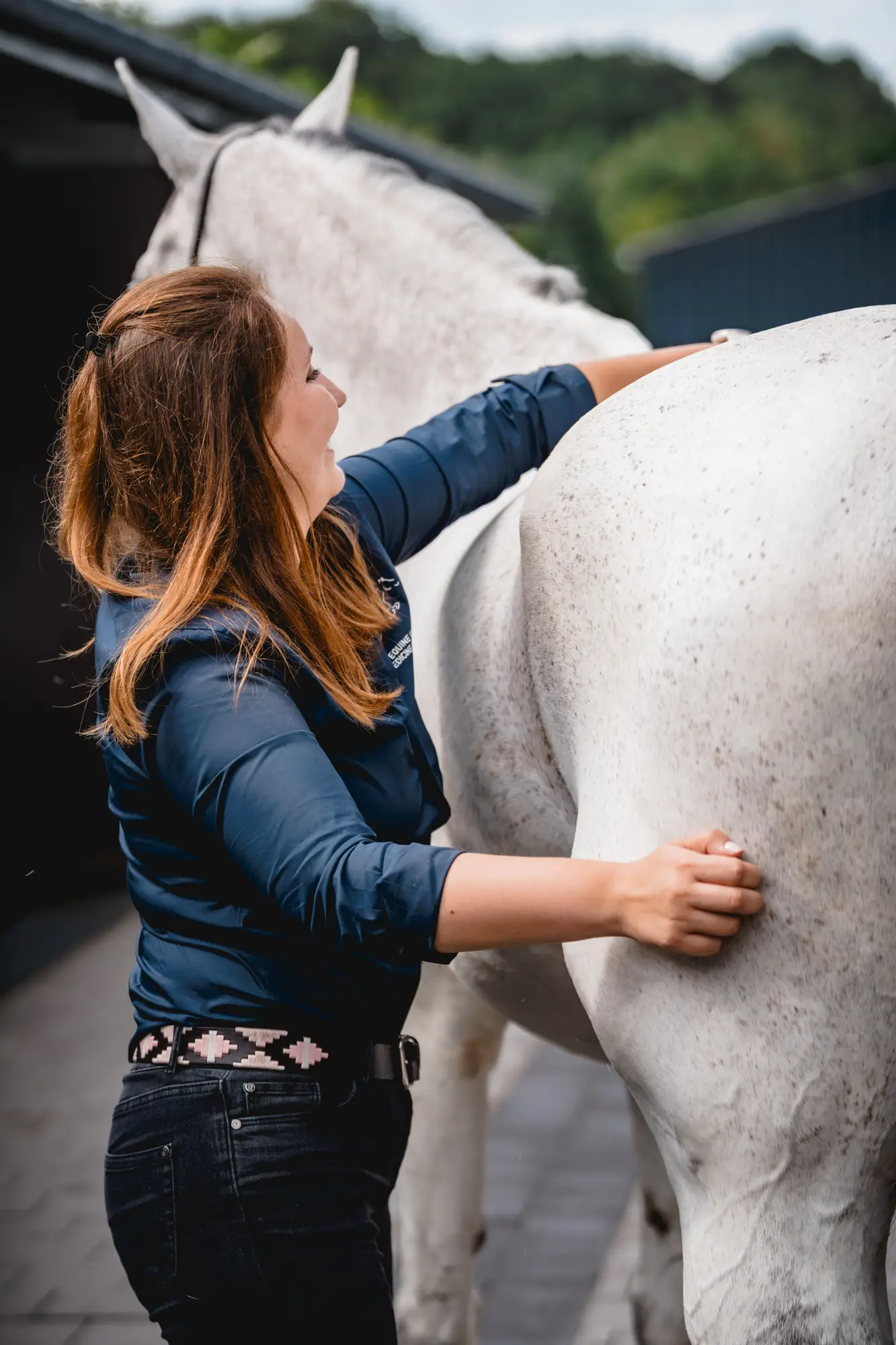
All past reports and diagnostic tests are reviewed.Static Physical Exam
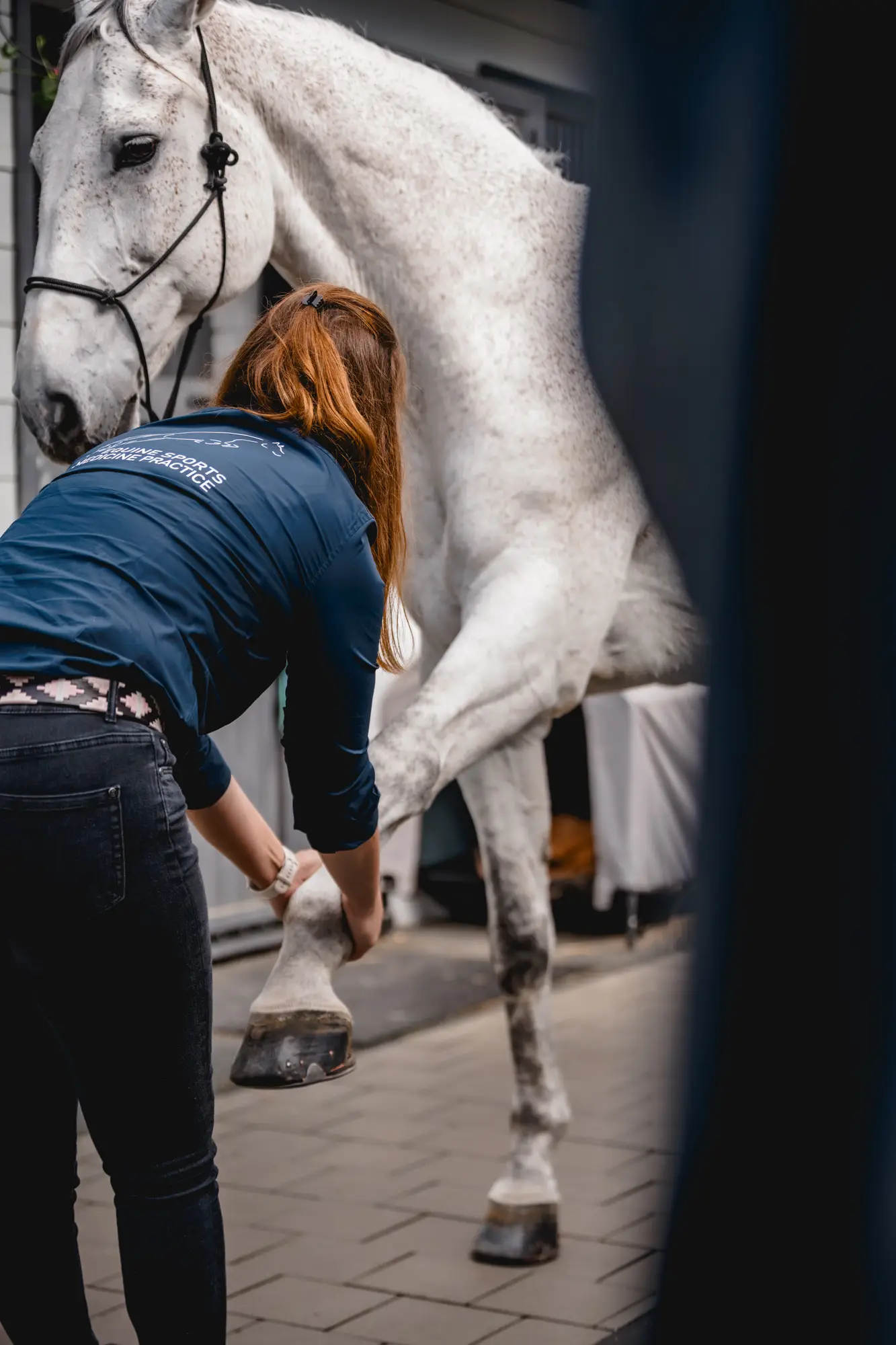
Hands-on assessment of posture, palpation and mobilisations.Dynamic Evaluation
Observation in hand and on the lunge on different surfaces and gaits.Ridden Assessment (if needed)
For problems only visible under saddle or linked to performance; can include monitoring tools such as ECG and lactate evaluation.Targeted Diagnostics
Where appropriate: radiography, ultrasound and diagnostic analgesia.
Diagnostic Summary & Management Plan
After assessment, we provide:
A clear diagnosis
A personalised management plan, which may include:
Medical treatments (e.g. injections)
Physiotherapy coordination
Rehabilitation and training advice
Shoeing recommendations
Looking for answers about your horse's health, well-being or performance?
Our team combines clinical expertise with advances diagnostic tools to support your horse’s health and well-being at every stage.